
TL;DR:
- 75 to 91% of B2B buyers say they would switch suppliers for a faster buying experience (Sana Commerce, 2025).
- B2B customers leave because of slow response time, not price or product quality.
- A static catalog shows what you sell. It cannot answer the questions that close a deal.
- After-hours inquiries lose 21x conversion probability when response slips past 5 minutes (MIT/InsideSales).
- ChatSKU turns your existing catalog into a 24/7 buying assistant with a single line of embed code.
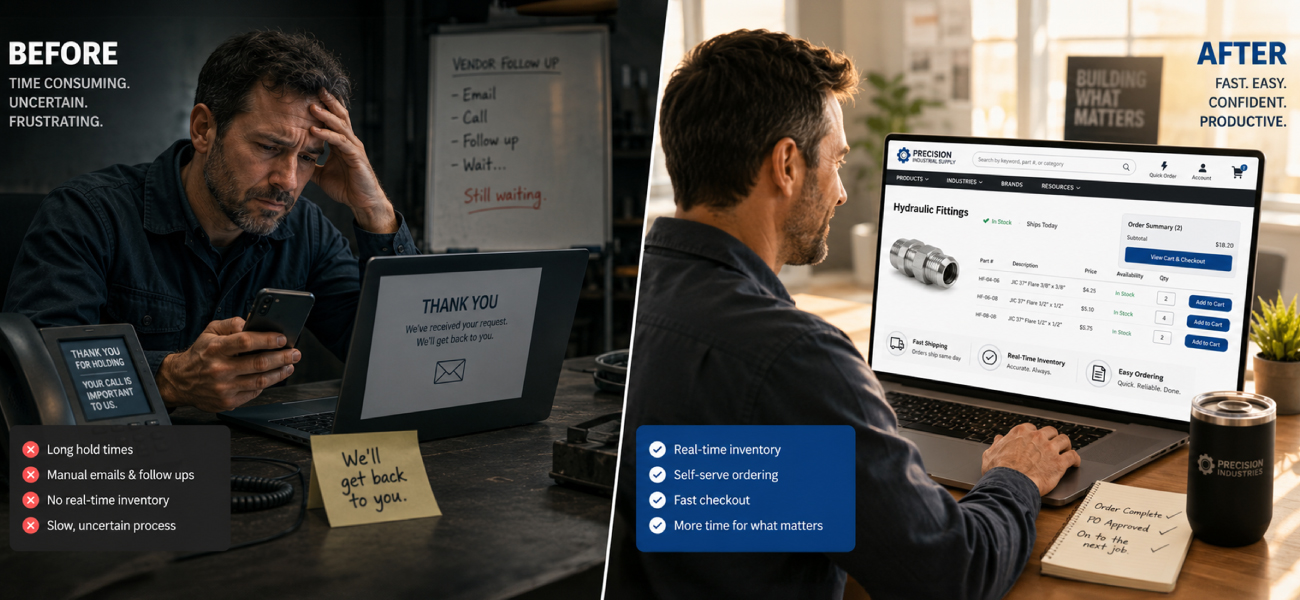
It rarely starts with a complaint. A long-term account begins ordering a little less. No dispute, no price negotiation, no angry email. The numbers just drift.
Then one day you find out they have been buying from a competitor. Weeks pass. Then months. Your rep assumes it is a seasonal thing, a budget cycle, maybe a project pause. Nobody flags it as churn because technically the account is still active. They left because getting an answer took too long, and someone else made it instant. No dramatic exit. Just a quiet drift toward whoever made buying easier.
If that pattern feels familiar, here is what is driving it and what actually fixes it.
Why do B2B customers switch to competitors?
B2B customers switch suppliers primarily because of slow response time, not price or product quality. This is the finding that surprises most sales leaders the first time they see it, because the instinct is always to look at margin, competition, or product fit when an account goes quiet. According to the Sana Commerce 2025 B2B Buyer Report, 75% of distributor buyers and 78% of manufacturer buyers say they would switch suppliers for a better, faster buying experience. Among US buyers, that number climbs to 91%.
Read that again: nine out of ten US B2B buyers are willing to walk away from an existing supplier relationship, not because of price, but because the buying experience is slow.
The customer who quietly defected is not unusual. It is the majority position.
The relationship can be solid. The pricing can be fair. The product can be exactly right. The buying experience is what loses the account, and it is the one thing most B2B companies are not actively managing.
What actually causes B2B customers to stop buying from you?
The root cause is almost never what gets blamed. It is that your catalog is a document, not a conversation. It shows what you sell but cannot answer the questions that close a deal: will this fit the equipment we run, is it in stock, what is the lead time.
Those answers exist inside your business. They live in your spec sheets, fitment guides, technical manuals, and the institutional knowledge your best reps carry. The problem is that a buyer browsing your catalog at 8pm on a Tuesday cannot reach any of them at the moment they need to make a decision. So they do one of two things. They pick up the phone, which most modern buyers actively avoid. Or they leave.
This is the core problem of a passive catalog: it generates traffic but cannot generate orders on its own.
If you’re not sure whether yours has crossed that line, 18 signs your B2B catalog isn’t enough walks through the specific moments buyers decide to look elsewhere.
Every visit that ends without a purchase, without a quote request, without a conversation, is a buying moment that slipped through without a system to catch it.
Where do B2B businesses lose the most revenue to slow catalog response?
The biggest revenue losses happen after hours, during rep transitions, and on complex multi-SKU orders. According to MIT and InsideSales research, response time past five minutes drops conversion probability by 21x. Not 21 percent. 21 times. Most B2B catalogs have no response capability at all outside business hours.
An inquiry that comes in Friday evening sits cold until Monday morning, by which point the buyer has already talked to someone else.
The response gap is a revenue problem. Every unanswered question during a buying moment is a lost order that never shows up in your CRM.
The most common high-loss scenarios:
- After-hours product inquiries that go unanswered until the next business day, by which point the buyer has moved on.
- Spec and compatibility questions that require a phone call to resolve, which most buyers under 45 will not make.
- RFQ requests sitting in an inbox while the buyer is simultaneously quoting a competitor who responds the same day.
- New buyers who cannot find what they need quickly enough and leave without contacting anyone, invisible in your analytics.
- Rep transitions where institutional knowledge about an account gaps and response quality drops temporarily.
What is the difference between a passive catalog and an active catalog?
A passive catalog displays products. An active catalog answers questions, guides buyers through compatibility decisions, and can generate a quote without requiring a human in the loop. The difference determines whether a buyer visit converts or bounces.
A passive catalog displays products. It is essentially a digital brochure, well organized and searchable, but ultimately static. A buyer can find a product page, see a price, and read a description. What they cannot do is get a question answered, confirm compatibility, generate a quote, or move toward a purchase decision without picking up the phone or sending an email and waiting.
An active catalog answers questions, guides buyers through compatibility decisions, surfaces relevant alternatives when something is out of stock, and can generate a quote without requiring a human in the loop. The difference between the two determines whether a buyer visit converts or bounces. And it determines whether your catalog is a sales channel or just a cost center that ranks on Google.
Built by the Virtina team with over 2,000 B2B businesses across 14 years, ChatSKU was designed specifically to solve the passive catalog problem without requiring a platform migration.
Passive Catalog vs Active Catalog
| Situation | Without ChatSKU | With ChatSKU |
|---|---|---|
| After-hours inquiry | Goes cold | Answered instantly |
| Spec question | Requires a phone call | Answered in chat |
| Quote request | 2-day email turnaround | Built in the conversation |
| Rep time | 70% on catalog lookups | Focused on closing |
| Buyer experience | Brochure | Buying process |
How does ChatSKU fix the B2B catalog response problem?
ChatSKU embeds directly into your existing product catalog with a single line of code. It reads your product data, spec sheets, and pricing logic, then makes all of it available through a conversational interface that buyers can access at any hour. Your PDF catalogs, fitment guides, and technical manuals become the knowledge base. When a buyer asks whether a part fits their equipment, ChatSKU answers from your actual documentation, not a generic response.
When they ask for a quote on 500 units, RFQ automation handles the request. See the ROI calculator to estimate what that shift is worth for your business.
The result is that a buyer who arrives at 9pm on a Sunday gets the same quality of response they would get from your best rep during business hours. That is what closes the gap between a catalog that generates traffic and one that generates orders.
Is ChatSKU right for manufacturers, distributors, and wholesalers?
ChatSKU was built specifically for B2B manufacturers, distributors, and wholesalers with complex product catalogs. The AI sales assistant handles the question volume that currently falls through the gaps between your catalog and your sales team.
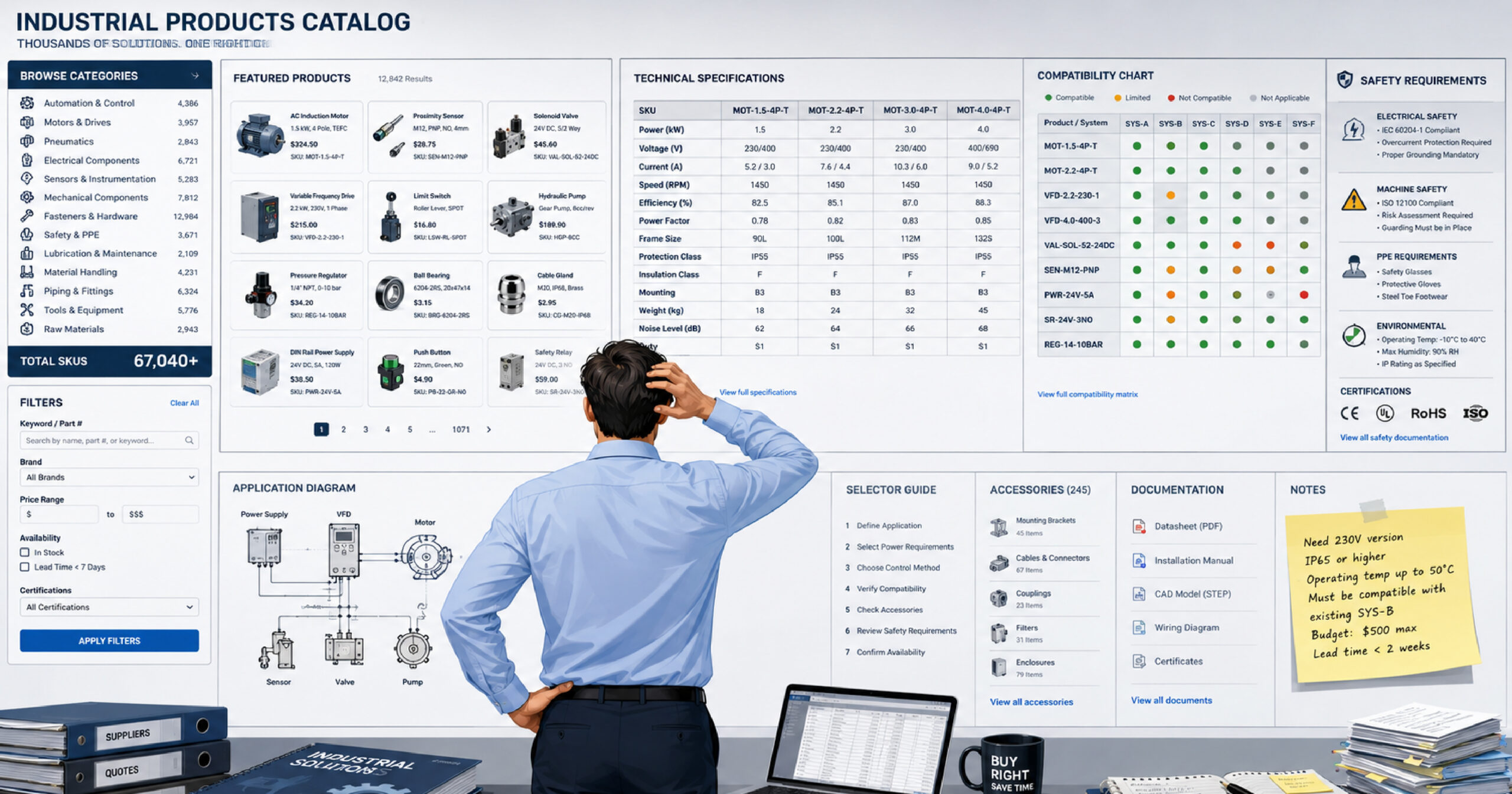
A manufacturer with 10,000 SKUs, dozens of compatibility variables, and industry-specific safety requirements cannot close deals through a product page alone. Neither can a distributor whose buyers are comparing three suppliers simultaneously and will go with whoever responds first.
Your most experienced rep knows exactly which part fits which application, what the lead times look like for a given volume, which alternatives are available if a SKU is backordered, and what the minimum order quantity is for a specific pricing tier. That knowledge exists. The problem is it only exists in one place at one time, and buyers cannot access it on demand.
What does ChatSKU actually do that a product search cannot?
Product search returns results. ChatSKU answers questions. The human bottleneck in B2B sales is a knowledge accessibility problem. ChatSKU makes your best rep’s knowledge available to every buyer at every hour. Learn more on the features page or book a demo.
Not a version of it. Not a simplified FAQ. The actual knowledge embedded in your catalog, your documentation, and your pricing logic, delivered conversationally at the moment a buyer needs it.
See the ROI calculator to estimate what closing the response gap is worth for your business, or book a demo to see ChatSKU on a catalog like yours.
Conclusion
B2B buyers do not wait for a callback when a faster option is one search away. The suppliers winning market share are not necessarily cheaper or more established, they are simply easier to buy from at the moment a buyer has a question. Closing that gap does not require a bigger sales team. It requires putting the answers your reps already know in front of buyers the instant they ask, day or night.
Turn your catalog into a 24/7 sales channel
Stop sending PDFs. Start capturing demand.
Try ChatSKU Free →